Source: A. Updegraff, A Literary Digest Atlas of the New Europe and the Far East, Funk and Wagnalls Co., New York-London, 1922.
The political landscape of the Caucasus in 1922 reflected a tumultuous period of competing national aspirations and great power interventions following World War I. As the Russian Empire collapsed and before Soviet consolidation, three newly independent republics—Armenia, Georgia, and Azerbaijan—advanced overlapping territorial claims that created enduring tensions in the region.
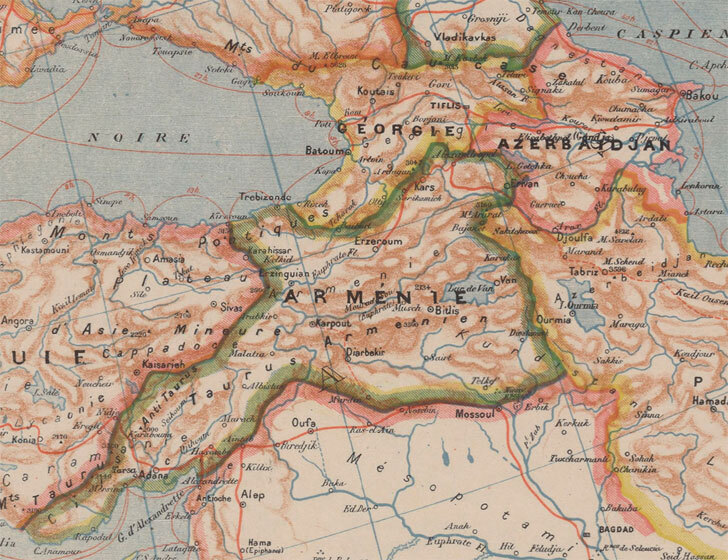
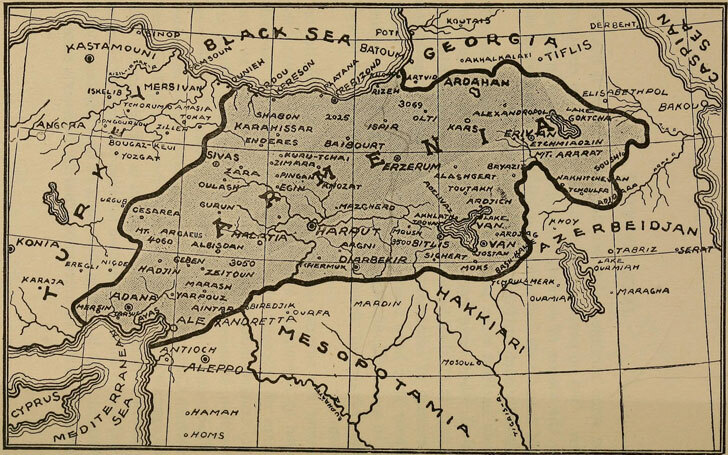
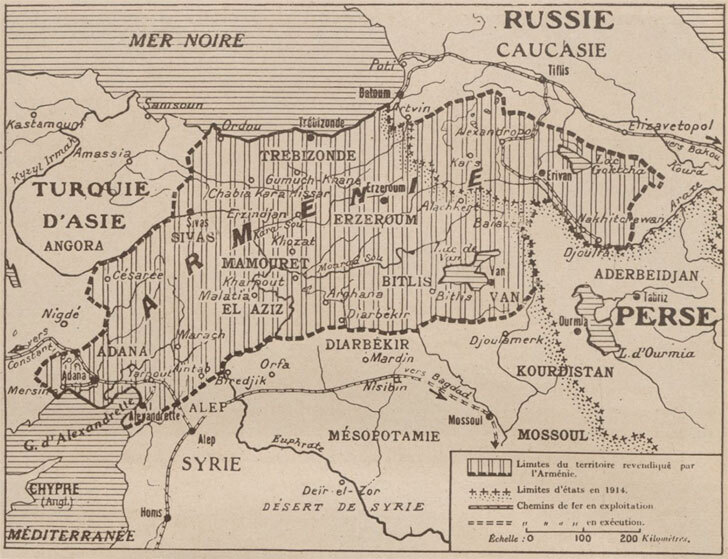
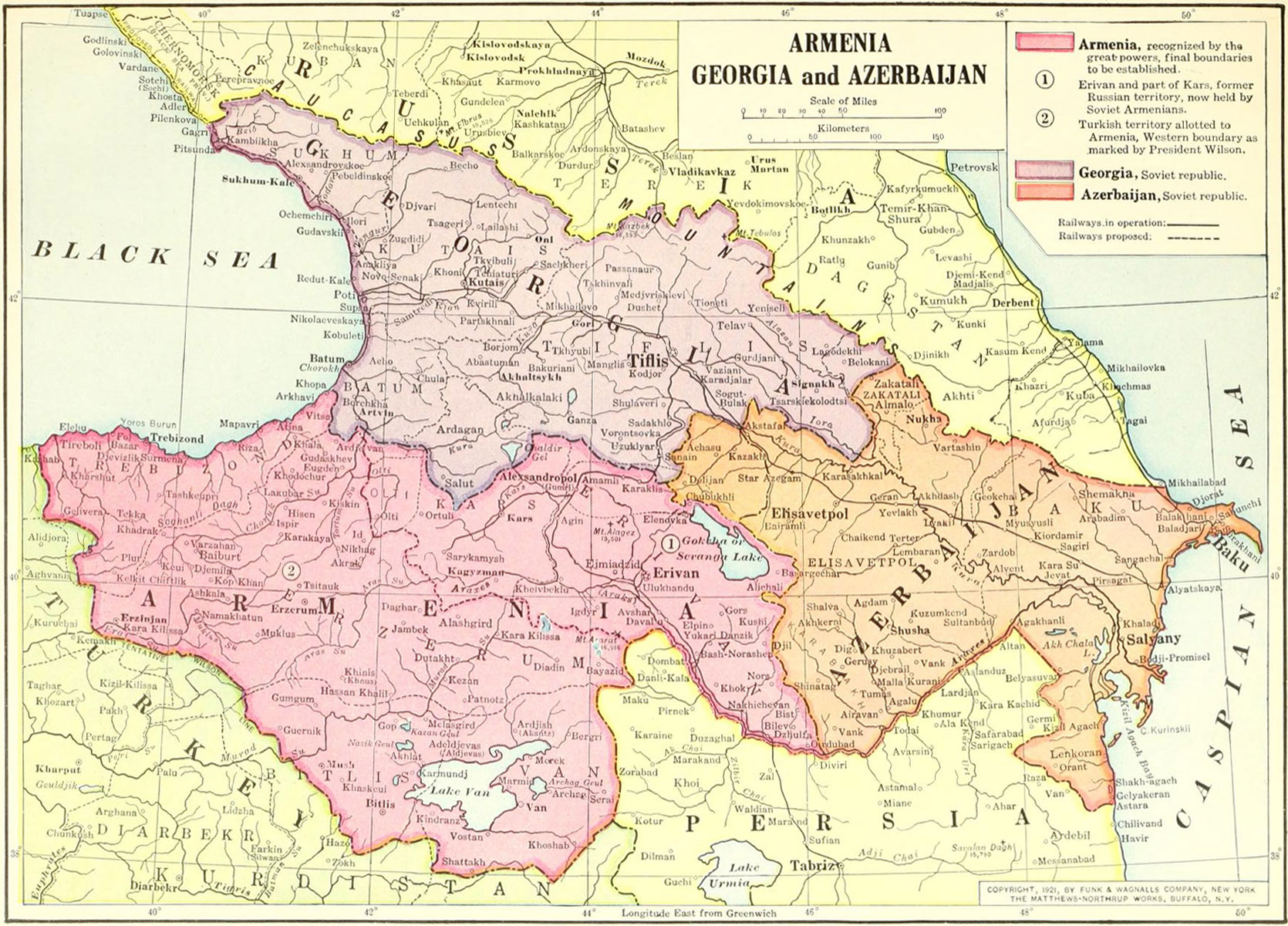
Armenia's territorial ambitions were perhaps the most dramatically articulated. Having suffered genocide under Ottoman rule, Armenian leaders sought recognition and protection for a homeland that would encompass historic Armenian territories. President Woodrow Wilson's arbitration in 1920 proposed expansive borders extending deep into eastern Anatolia, including the provinces of Erzurum, Van, and Bitlis, as well as access to the Black Sea through Trebizond. This "Wilsonian Armenia" represented the maximal vision of Armenian self-determination, incorporating areas where Armenians had constituted significant populations before 1915. The map by Allan Updegraff illustrates precisely these Wilsonian boundaries, depicting an Armenian entity far larger than what would ultimately materialize.
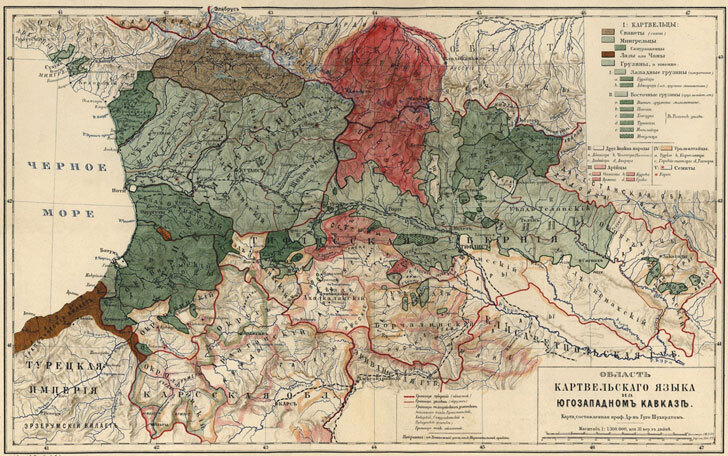
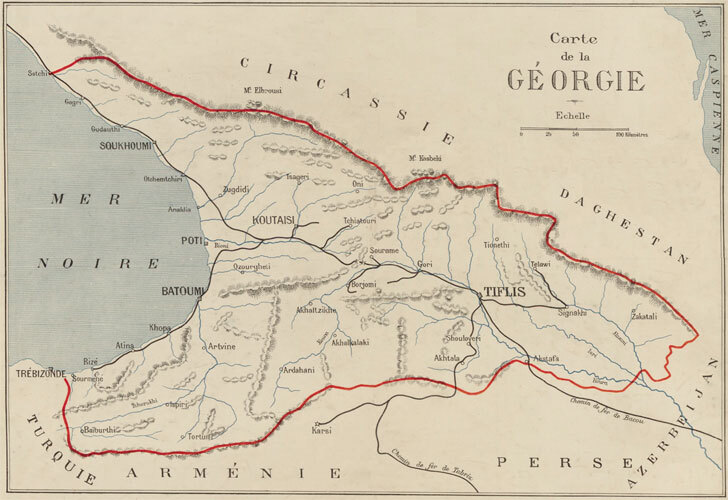
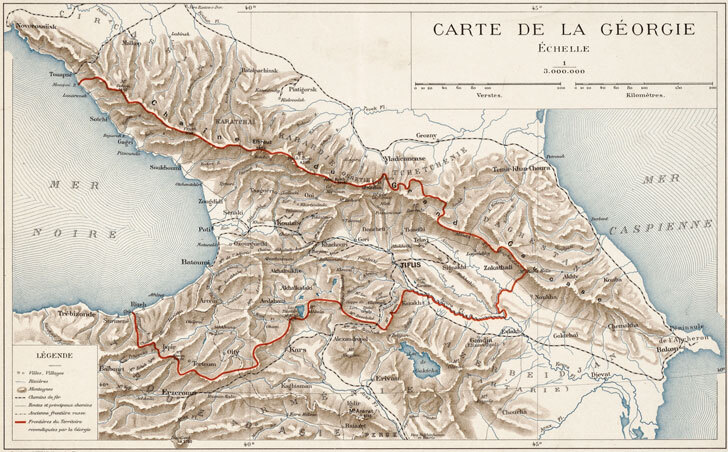
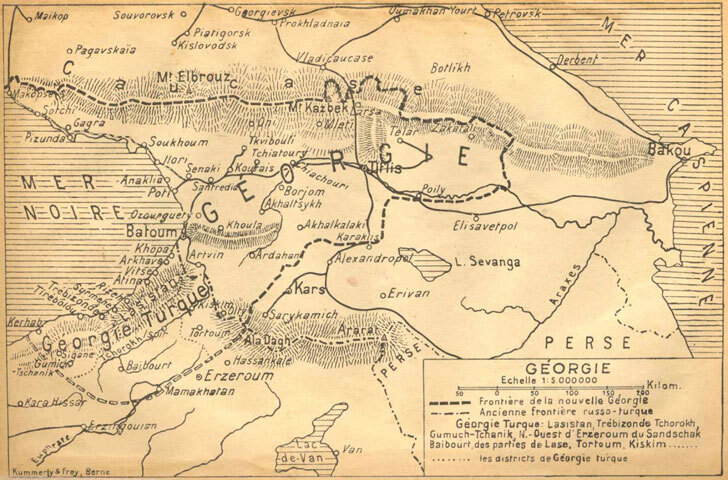
Georgia's claims centered on maintaining its historical territories within the South Caucasus. The Georgian Democratic Republic asserted control over regions including Abkhazia, South Ossetia, and parts of Adjara, basing its claims on medieval Georgian kingdoms and more recent administrative divisions. Georgian nationalists particularly contested Armenian claims to the Lori and Akhalkalaki regions, where mixed populations complicated neat ethnic divisions.
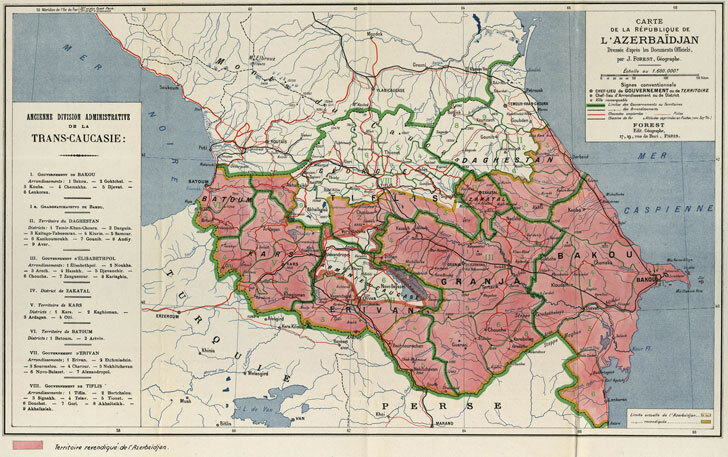
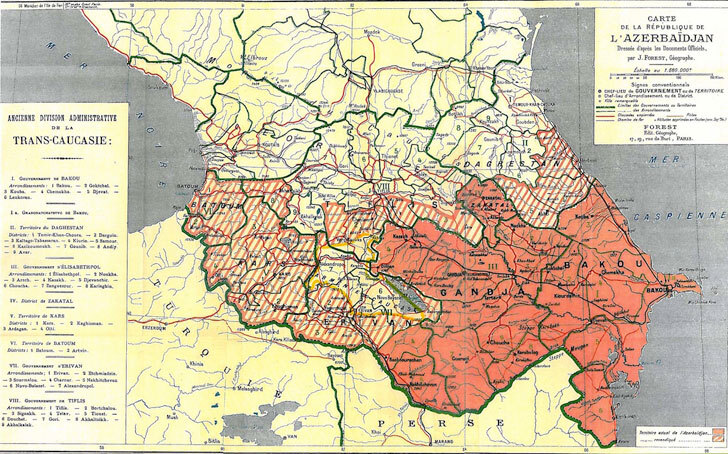
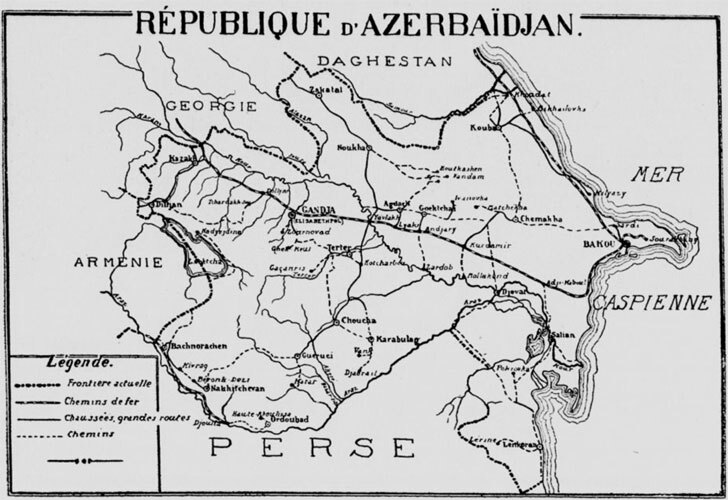
Azerbaijan, meanwhile, advanced its own territorial vision encompassing not only the oil-rich Baku region but also disputed areas like Nagorno-Karabakh, Zangezur, and Nakhichevan. Azerbaijani claims emphasized demographic majorities in certain districts and economic considerations, particularly regarding transportation corridors and resource access. The contested status of Nagorno-Karabakh, with its Armenian majority population within Azerbaijani-claimed territory, exemplified the intractable nature of these disputes.
These competing visions proved impossible to reconcile peacefully. Wilson's proposed Armenian borders never achieved implementation, as Turkey rejected the arbitration and the United States declined to enforce it. By 1922, Soviet forces had occupied all three republics, and Moscow would impose its own solutions to territorial disputes. The aspirational borders depicted in contemporary maps like Updegraff's thus captured a fleeting moment of possibility that quickly dissolved into Soviet administrative reality, leaving unresolved grievances that would resurface decades later with the USSR's collapse.